Diversity, equity and inclusion

Our approach
Diversity, equity and inclusion has always been an important part of our culture.
At Metro Bank, we want every colleague to feel that they belong, are included, accepted, and valued. Our commitment to being a leader in diversity and inclusion helps us to bring out the best in our colleagues, attract new talent and thrive as a business.
Reflecting our communities
We have always believed it’s important that Metro Bank represents the communities we serve. This is central to our relationship banking ethos and shapes how we support our colleagues every day.
We are proud to have a diverse UK workforce with strong representation across gender and ethnicity. Almost half of our colleagues are women, and with half coming from an ethnic minority background our teams bring together a wide range of perspectives that help us better serve our customers.
Jump to section:
Measuring progress
Building diversity across our business is an ongoing journey. Through the commitment of our leaders, the confidence of our colleagues, and our focus on delivering clear actions we continue to build a bank where everyone feels welcome, valued and able to thrive.
To understand how included our colleagues feel and how diverse our workforce is, we track and measure our progress. This helps us to identify where to focus our efforts.
We publish our pay gap data, commit to reducing gaps and act as proud signatories to initiatives including the Women in Finance Charter and the Race at Work Charter, supporting efforts across the sector to improve representation and promote inclusion at work.
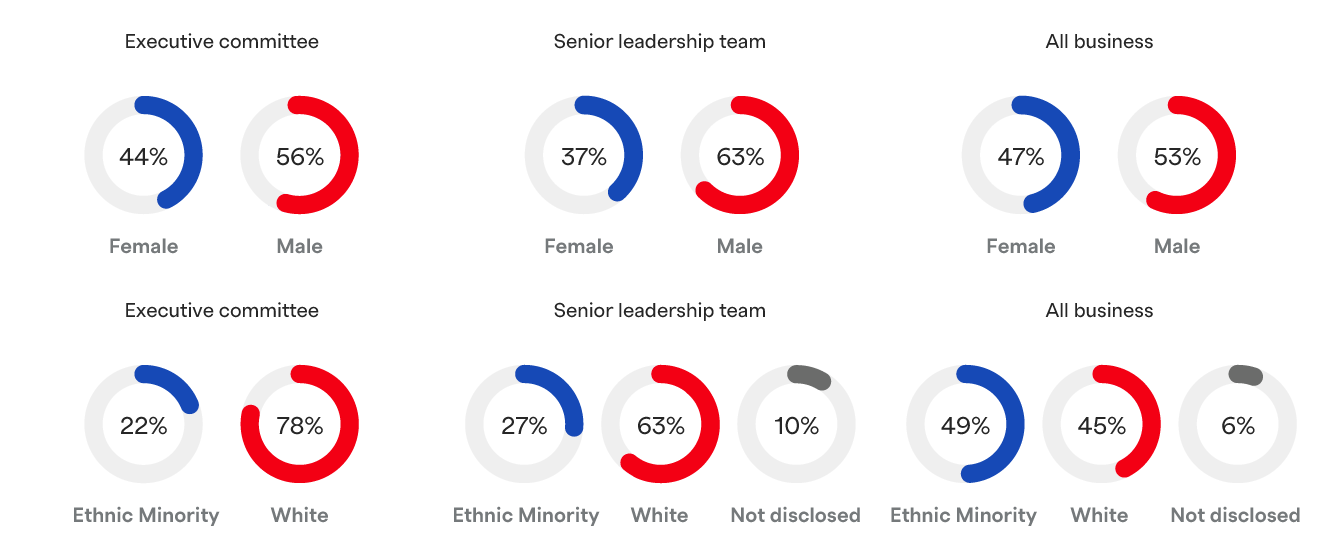
As at 31 December 2025
What is the gender pay gap?
The gender pay gap shows the difference in average pay between men and women across our organisation. It is not the same as equal pay.
We pay men and women equally for the same or equivalent roles. The gender pay gap reflects the overall distribution of men and women across different roles and pay levels.
The gender bonus gap shows the difference in average bonus payments received by men and women. Like the pay gap, it reflects the distribution of roles and working patterns across the organisation.
Mean and median – what’s the difference?
- Mean gender pay gap: This is the difference between the average hourly pay of men and women. It can be influenced by very high or very low earners.
- Median gender pay gap: This is the difference between the hourly pay of the “middle” man and the “middle” woman when colleagues are ordered from lowest to highest paid. It is often seen as a clearer reflection of the typical experience.
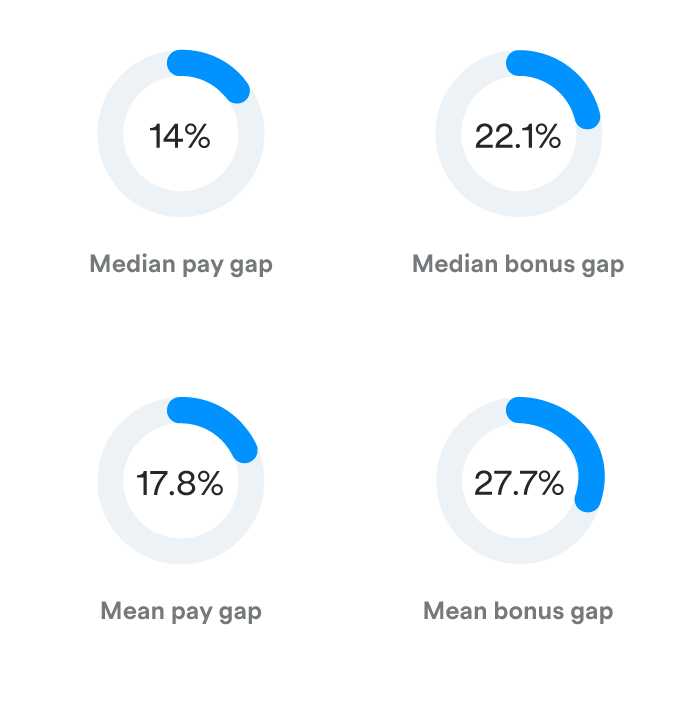
Our Gender Pay Gap
Our median gender pay gap continues to reduce, showing year-on-year improvement.
The mean gender pay gap has increased slightly compared to last year, although the longer-term trend remains downward.
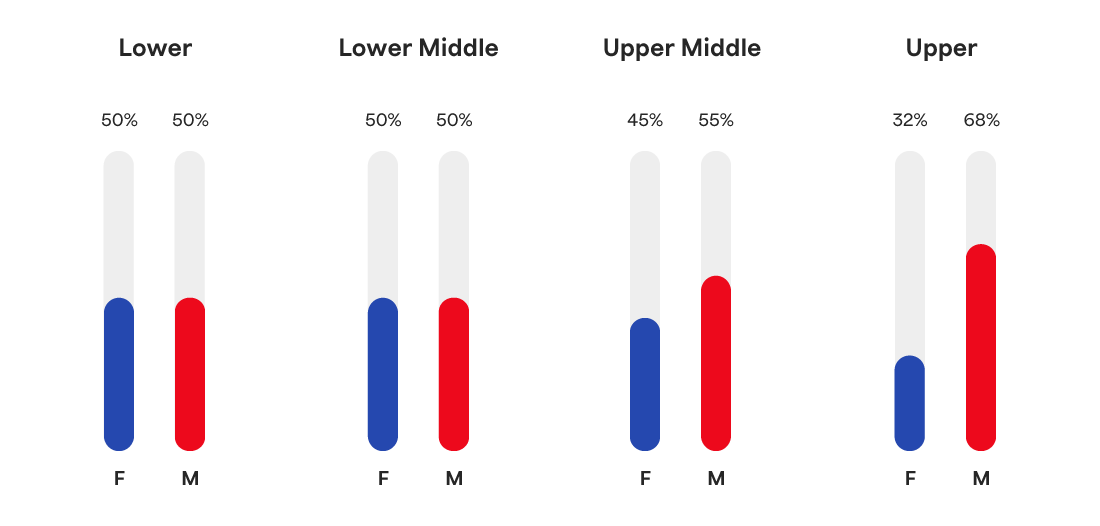
The main driver of our gender pay gap is the lower proportion of women in higher-paid, senior roles. While our lower and mid-level roles have a broadly balanced gender split, men are more likely to hold higher-paid specialist and leadership positions.
Our Gender Bonus Gap
Our gender bonus pay gap
Both the mean and median gender bonus gaps have decreased compared to last year, which is a positive step forward. Bonus outcomes can fluctuate.
What is causing our bonus gap?
Several factors contribute:
- Fewer women in senior roles, where bonuses are typically higher
- Part-time working patterns – women are more likely to work part time, and bonuses are based on actual salary rather than full-time equivalent pay
Performance ratings are broadly similar for men and women, so differences in performance are not a key driver of the bonus gap.
Proportion of female and male colleagues who received a bonus

In 2025 90% of women and 88% of men received a bonus.
What are we doing about the gender pay gap?
We’re taking a range of actions to close the gender pay gap, which are aimed at tackling the main drivers. Here are some of the steps we took in 2025:
Attracting talented women into senior roles
- We ran a targeted recruitment campaign profiling senior women as part of the expansion of our Corporate and Commercial function. The proportion of women hired increased, and we’re building this learning into future campaigns
- We continue to support hybrid working, making it easier especially for those who have caring responsibilities to balance work and home life.
Developing our female colleagues
- As part of the Seeing is Believing campaign with our partners at the England and Wales Cricket Board, we hosted a colleague event on the importance of visibility and representation when it comes to helping young women achieve their potential, featuring outstanding women leaders in the bank.
- Our Women on Work colleague inclusion network continues to run mentoring circles and introduced a new cross-team matching scheme in 2025 to help colleagues explore different career paths.
- We extended our Back to Work buddy scheme for colleagues returning from family leave to also include those returning from shared parental leave.

"Having a workforce that reflects the diversity of our customers and communities has always been part of who we are at Metro Bank. Numbers only tell part of the story, but they matter — they show us where we’ve made progress and where we still have work to do. It’s encouraging to see our median pay gap improve for the third consecutive year, and we remain focused on further progress — targeting our actions and taking meaningful steps to make a lasting difference."
Rachel Duncan
Chief People Officer
Women in Finance Charter

We are signatories of the Government's Women in Finance Charter
- women made up 27% of our Board
- 44% of our ExCo
- and 37% of our leadership roles overall.
Following these changes, we have set a new target of 45% female representation in leadership roles by 2028, reaffirming our commitment to improving gender representation in senior roles.
Our approach is supported by clear plans and strong accountability. Overall responsibility for gender diversity and inclusion sits with our Chief Executive, Dan Frumkin, with the active support of every member of our Executive Committee. Diversity and inclusion outcomes are also reflected in our approach to variable reward.